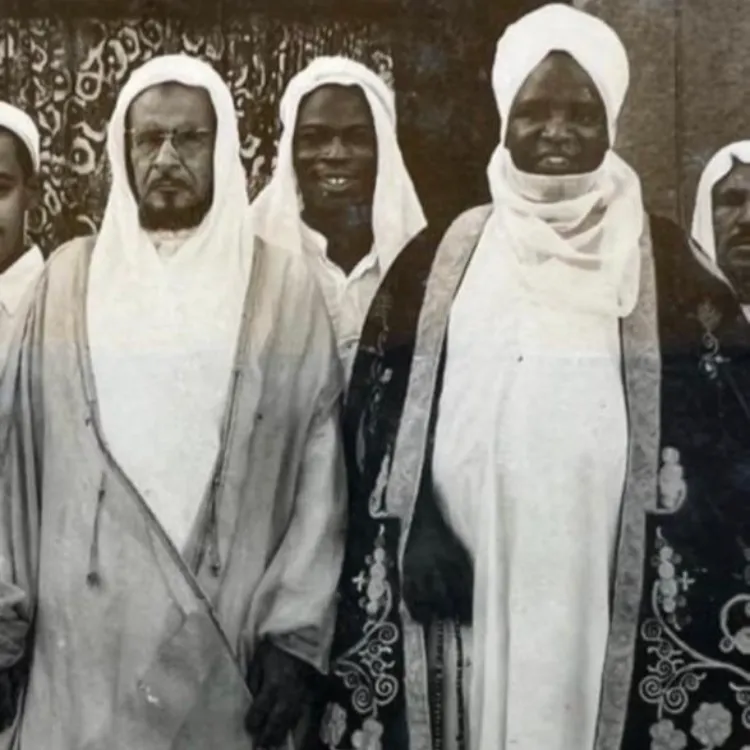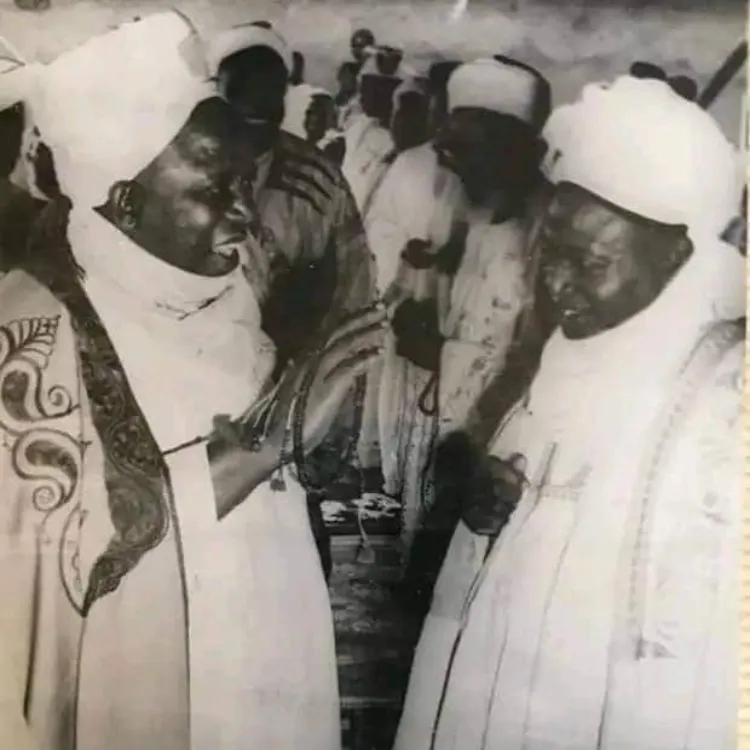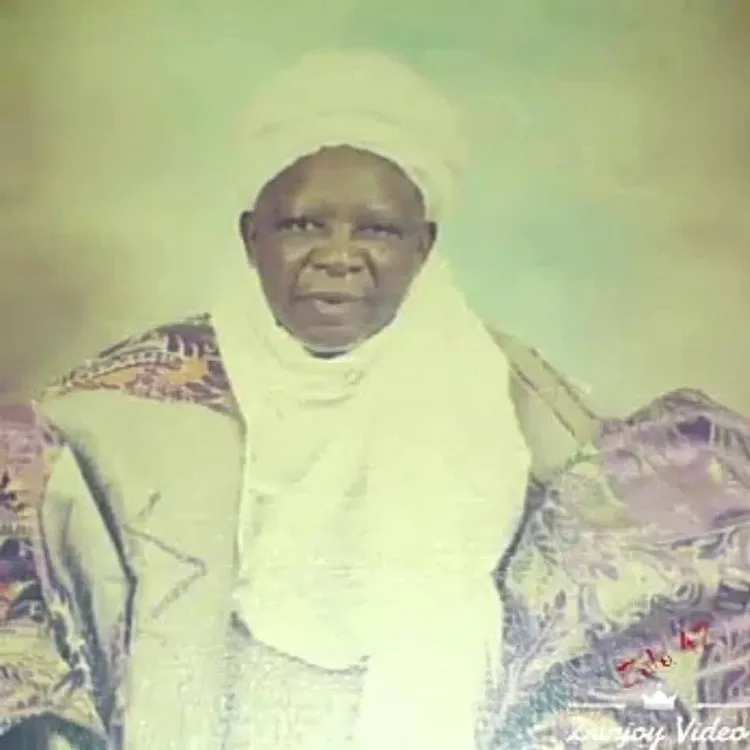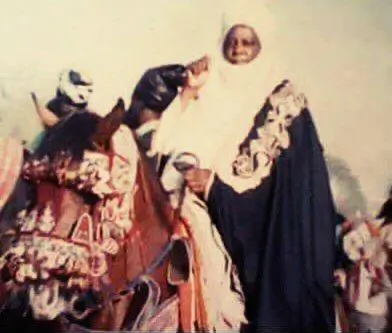
Legacy, Achievements, and Contributions of His Royal Highness Alhaji Zulkarnaini Gambari Mohammed
Early Service and Public Career
Before ascending the throne, Alhaji Zulkarnaini Gambari Mohammed began his career as a Court Registrar in the Native Authority Court, Lafiaji (1937–1943), where he became known for fairness, diligence, and deep respect for justice. His exceptional service earned him recognition within both traditional and colonial administrative circles.
He personally adjudicated over 300 land dispute cases without a single appeal upheld against him — a record noted in the 1942 Native Court Annual Report, earning him the rare colonial commendation “Officer of Exceptional Merit.”
In recognition of his integrity and leadership, he was later appointed by Sir Ahmadu Bello, the Sardauna of Sokoto and Premier of Northern Nigeria, as a Minister without Portfolio in the Northern Regional Government (1957–1959). In that role, he contributed to policy discussions and regional development. Remarkably, he was one of only three emirs in Northern Nigeria to serve as a Minister during that period — alongside the Emir of Kano and the Emir of Zazzau — a reflection of his intellect, foresight, and statesmanship.
He was the only Fulani emir from a Yoruba-majority emirate in this trio — a diplomatic masterstroke by Ahmadu Bello to balance ethnic representation in the Northern House of Assembly.
Accession to the Throne
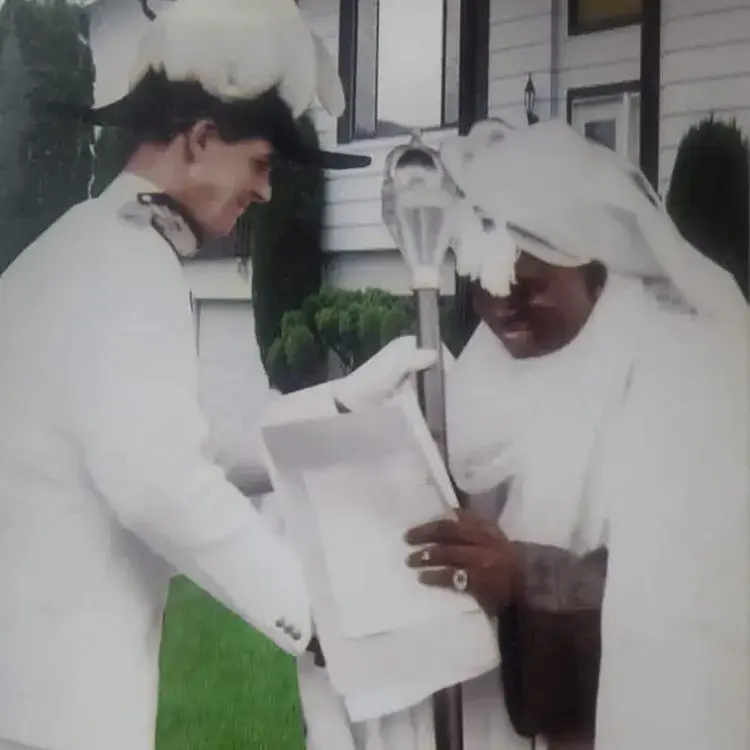
In 1959, at the age of 45, he was formally presented with the Staff of Office by British District Officer Mr. J.H. Smith at a grand durbar attended by over 10,000 people in Ilorin’s Metropolitan Square. His ascension ushered in an era of modernization, development, and cultural pride.
The event was broadcast live on the Nigerian Broadcasting Corporation (NBC) — the first emir installation in Northern Nigeria to be aired nationally, symbolizing Ilorin’s rising prominence.
Achievements as Emir of Ilorin
During his 33-year reign (1959–1992), Ilorin experienced remarkable growth and transformation. Working with both traditional institutions and government authorities, the Emir facilitated major development projects — including:
- The construction of the Ilorin–Jebba Road (1962–1965), funded partly by emirate levies
- The establishment of the Ilorin Central Market (1968), which became the commercial heartbeat of Kwara State
- The founding of Queen Elizabeth Secondary School, Ilorin (1960) — the first co-educational secondary school in the emirate
- Creation of Kwara State (1967): Ilorin became the State Capital under the administration of General Yakubu Gowon.
- Establishment of the University of Ilorin (1975): a flagship federal university and a cornerstone of higher education in Nigeria.
- Establishment of the Kwara State Polytechnic (1973) and College of Education, Ilorin (1974): key institutions advancing technical and teacher education.
- Construction of the Kwara State Stadium (1977) by the State Government
- Establishment of the Federal Government College, Ilorin (1973): one of Nigeria’s Unity Schools.
- Construction of Ilorin International Airport (1978) by the Federal Government.
- Establishment of the University of Ilorin Teaching Hospital (1980): a major federal health institution.
- Construction of Asa Dam and Reservoir (1984): a critical state water-supply project.
- Construction of Jebba Hydroelectric Power Station (1985): a federal power project serving the region.
- Reconstruction and modernization of the Ilorin Central Mosque (opened 1981): one of the most iconic religious landmarks in Northern Nigeria.
- National Honours and Academic Distinctions
- His Royal Highness was widely recognized for his leadership and service:
- Commander of the Order of the Federal Republic (CFR): National Honour, 1979.
- Chancellor, Federal University of Technology, Akure (appointed 1982).
- Honorary Doctor of Laws (LL.D), Federal University of Technology, Akure, 1987.
- Honorary Doctor of Laws (LL.D), University of Ilorin, 1988.
- He also served as the Pioneer Chairman of the Kwara State Council of Chiefs, where he promoted unity, traditional values, and inter-communal cooperation
A strong advocate for education, he promoted both Islamic scholarship and Western education, believing that knowledge was essential to progress. He personally sponsored 47 students to study in Egypt, Sudan, and the UK between 1960 and 1975, and supported the establishment of over 30 Quranic and primary schools across the emirate.
A Wise King, Scholar, and Orator
The late Emir was renowned for his wisdom, eloquence, and oratory. Many of his sayings are still fondly quoted by his subjects today, particularly the proverbs and expressions he coined in the Yoruba language. His most famous: “Ẹni tí ó bá ń wá ọba, kò ní í rí ìdí ẹ̀ṣin” (“He who seeks the king will not see the horse’s tail”) — a metaphor for humility in leadership.
His speeches often blended humour, moral teaching, and deep cultural insight, leaving lasting impressions on those who heard him.
He was multilingual, fluent in Fulfulde, Hausa, Yoruba, and English, and deeply versed in Islamic knowledge. He authored a handwritten Arabic manuscript on Tafsir (Quranic exegesis), still preserved in the Ilorin Emirate Library. His ability to bridge languages, cultures, and generations made him a unifying figure and a respected custodian of both faith and tradition.
In 1976, he delivered a 45-minute extemporaneous speech in Yoruba at the Oba of Benin’s palace — without notes — that moved the Oba to gift him a ceremonial coral bead crown, a rare honor for a Fulani emir.
Enduring Legacy
His Royal Highness Alhaji Zulkarnaini Gambari Mohammed passed away on Sunday, 23rd February 1992, in a hospital in Germany, where he had been receiving medical treatment. His remains were flown back to Ilorin and buried the same day according to Islamic rites, with over 50,000 mourners in attendance — including 12 sitting emirs and the then-Military Governor of Kwara State.
He remained until his final days a beacon of integrity, humility, and service. His reign left behind not only physical development but also an enduring spiritual and moral legacy.
He is remembered as a wise king, a devout scholar, and a true servant-leader whose values continue to inspire the Ilorin Emirate and beyond. His words, actions, and example remain part of the living memory of his people — a timeless symbol of leadership guided by knowledge, justice, and faith.